
Asia Pacific Education unionists demand heat adaptation in schools amidst record-breaking temperatures
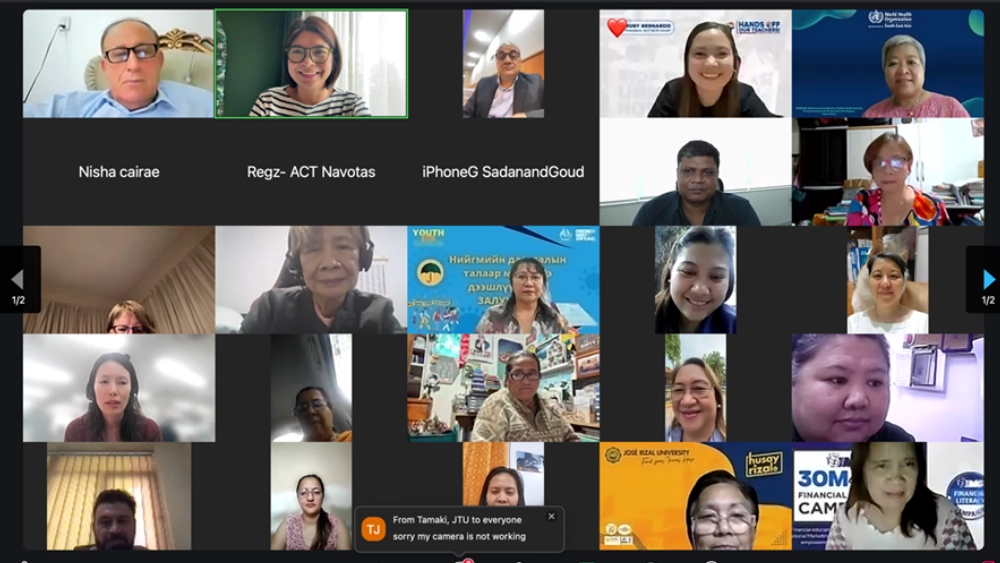

Amidst severe summer heatwaves in Asia, education unionists strategized on union actions demanding effective heat adaptation during Education International Asia-Pacific’s 4th Climate Justice webinar in June.
More than 40 Asia Pacific union leaders and educators attended the webinar titled “Scorched Earth: Educators Demand Heatwave Adaptation in Schools,” which aimed to discuss the impacts of extreme heat on education systems and map out adaptation strategies as part of union demands in social dialogue and beyond. Several countries in Asia, including India, the Philippines, Thailand, Bangladesh, Myanmar and Palestine, recorded sweltering temperatures between 38-45C during the summer. In India, for example, some 110 people were killed, and more than 40,000 were affected by heat strokes. Meanwhile, in Bangladesh, 33 million children were impacted by school closures owing to heatwaves, according to UNICEF and Save the Children. In the Middle East, more than 1,000 hajj pilgrims reportedly died after the holy city of Mecca in Saudi Arabia reached 51.8C during the days-long pilgrimage. Many schools in Southeast and South Asia have been forced to close during the heatwaves and shift to online modes of classes, in some cases. Worsening heatwaves are affecting education systems across Asia in profound ways, prompting many education unions to contend with the urgent need for effective heat adaptation in schools.
EIAP’s latest Climate Justice webinar sought to provide a platform for union leaders and members to learn about the vulnerabilities of the Asia Pacific region as well as climate adaptation practices to take during heatwaves. It has also produced an infographic to support educators and their unions, which can be found in this newsletter and will be disseminated within the EIAP network.
EIAP’s latest Climate Justice webinar sought to provide a platform for union leaders and members to learn about the vulnerabilities of the Asia Pacific region as well as climate adaptation practices to take during heatwaves.
Experts from the scientific and public health communities and union representatives led the discussion. Ruby Bernardo, general secretary of ACT Philippines – National Capital Region, opened the webinar by talking about the consequences of a 15-day heatwave last April on her students and colleagues. Bernardo shared that, because of the ill-preparedness of the Philippine education system to climate disasters, many students and teachers suffered from health issues. However, she and the union convened with a plan to demand quick responses from government officials, she said. ACT Philippines led a survey among their membership to determine the key issues that teachers were grappling on the ground so that they could come up with appropriate demands and solutions. Through multiple dialogues and consultations, ACT Philippines was able to push for the school calendar to be reverted to the old schedule to avoid the peak summer months of April and May, she added. However, this should only be part of the solution and more policies and adaptation programs must be done to avoid the lethal consequences of prolonged heatwaves, she said.
For example, drinking water must be provided in every classroom, but schools must avoid providing water in plastic containers, as heat triggers microplastics, which can cause worse and long-term health issues in students and educators alike. She advised schools to invest in earthenware jugs to store water as this not only ensures microplastic levels are kept to a minimum but also that drinking water is kept cool.
Meanwhile, Dr. Suvajee Good, a public health expert and regional advisor for the World Health Organization – Southeast Asia, spoke about the scientific dimensions of heatwaves and their impacts on public health. She also outlined practical adaptation practices that educators can demand from their schools. For example, drinking water must be provided in every classroom, but schools must avoid providing water in plastic containers, as heat triggers microplastics, which can cause worse and long-term health issues in students and educators alike. She advised schools to invest in earthenware jugs to store water as this not only ensures microplastic levels are kept to a minimum but also that drinking water is kept cool. Ms. Lourdes Tibig, a retired climatologist from the Philippine weather agency, explained the scientific background of heatwaves and the best practices for systemic adaptative strategies to intense heat. She noted that extreme heat is the deadliest weather phenomena because it is often overlooked or simply endured until it is too late. Hence, it is important to implement system-wide adaptation programs, especially in the public sector such as education. However, she also warned against maladaptive practices such as using air-conditioners because for as long as electricity is still primarily sourced from fossil fuels, rising energy demands will also exacerbate climate change in the long run through higher carbon emissions.
“Our education systems in the Asia-Pacific are ill-prepared for these climate inevitabilities. With spending on public education on the decline, it is no surprise that climate adaptation in schools is not a priority for many governments. This is why our work as unionists is critical for the well-being and future of our educators and students.”
Anand Singh, EIAP Regional Director
In his opening remarks, EIAP Regional Director Anand Singh noted that educators are on the frontlines of the crisis and yet governments are failing to invest in potentially life-saving adaptation mechanisms. “Our education systems in the Asia-Pacific are ill-prepared for these climate inevitabilities. With spending on public education on the decline, it is no surprise that climate adaptation in schools is not a priority for many governments. This is why our work as unionists is critical for the well-being and future of our educators and students,” he said. He added that education unions must use the tools at their disposal, such as collective bargaining and social dialogue, to push for effective climate adaptation programs in our schools and communities.