Asia Pacific education unionists drive discussions on climate justice and just transition at EI 10th Congress

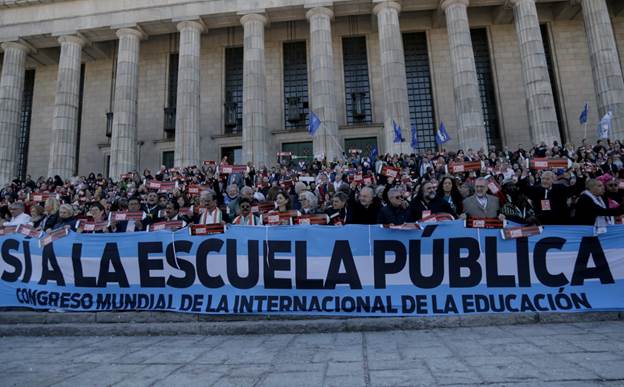
Amidst this year’s record-breaking heatwaves in the Asia-Pacific, educators from the region stressed the critical role that climate education plays in building resilience among students, their communities and beyond during a breakout session at Education International’s 10th World Congress in Buenos Aires, Argentina on 26 July to 02 August 2024.
Educators from across the world, including Rosalia Fatiaki of the Association of the University of the South Pacific Staff (Fiji), Sifiso Ndlovu of the Zimbabwe Teachers’ Association and Dan Montgomery of the American Federation of Teachers, discussed best practices on climate education and union advocacy for a just transition in education and advancing the goals of EI’s Teach for the Planet campaign. The session was moderated by Jo Grady, General Secretary of the University and College Union of the United Kingdom.
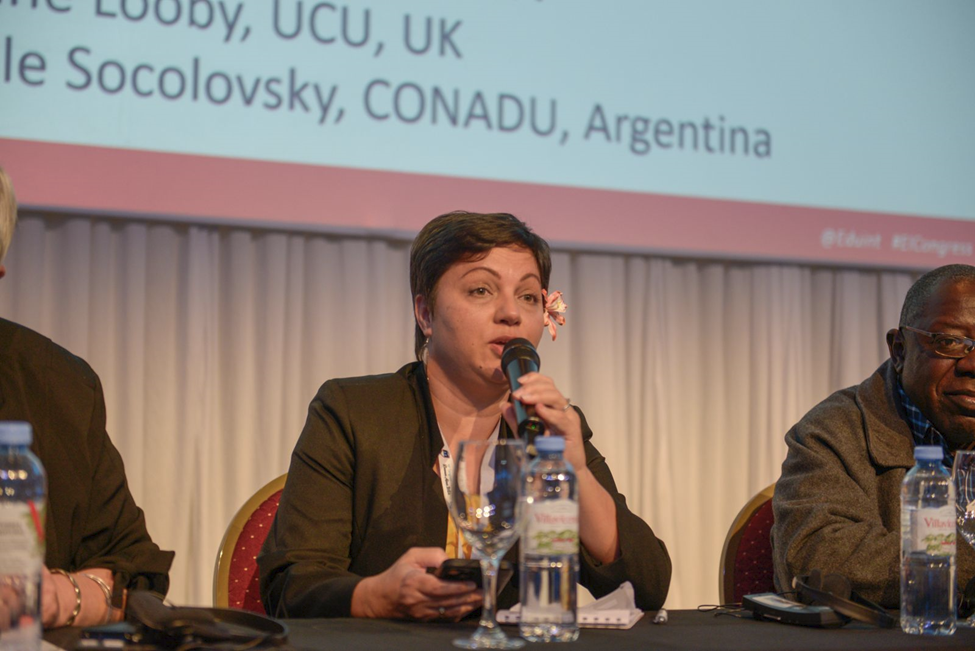
“The Pacific is facing the worst impacts of climate change, yet we did the least to contribute to the problem. The big players need to take responsibility because the injustice of climate change is being faced by small island states…Educating our people to be resilient is key for the Pacific. Raising awareness and advocating for climate justice are critical actions that educators can take,” Fatiaki said.
“The Pacific is facing the worst impacts of climate change, yet we did the least to contribute to the problem. The big players need to take responsibility because the injustice of climate change is being faced by small island states…Educating our people to be resilient is key for the Pacific. Raising awareness and advocating for climate justice are critical actions that educators can take.”
Rosalia Fatiaki, Association of the University of the South Pacific Staff (Fiji)
In 2024, the Asia-Pacific education sector felt the intensifying impacts of climate change and underscored its ill-preparedness as soaring temperatures during the summer forced hundreds of schools in the Philippines, Cambodia and Bangladesh to shut down for days or weeks. In India, more teachers reported experiencing heat strokes and other heat-related ailments. Meanwhile, Pacific Island nations also suffered through extreme heat while also facing heightening sea level rise.
Nanise Bale Kamikamica of the Fijian Teachers’ Association presented her union’s climate action plan, which was one of the outcomes of EIAP’s first E4SD Educators Stand for Climate Justice and a Just Transition conference in Lautoka, Fiji in May 2023. “Indigenous traditional knowledge and practices are an often-overlooked component of climate resilience. Age-old cultural knowledge from the Pacific can help inform modern climate preparedness. We need to disrupt the status quo by bringing traditional knowledge perspectives to the forefront of global discussions and solutions,” she said.
The Educators for Sustainable Development (E4SD) campaign, which was launched in 2021, continues to be a priority program for Education International Asia-Pacific. With the goal of harnessing union power into advancing a just transition in education and climate justice for broader society, educators from Asia-Pacific have engaged in various activities that would bolster their knowledge and capacities to advocate for climate action in their schools, communities and governments. This year, educators also focused on extreme heat in the classroom, which has proven detrimental to the health and well-being of educators.
Ruby Bernardo of Alliance of Concerned Teachers-NCR from the Philippines who attended the session said it was inspiring to see how teachers’ unions across the world are mobilising for climate justice. “It was powerful as I was inspired by the various actions that fellow unionists are taking to advocate for climate justice and prepare their students for the challenges of a greener world. More importantly, the sense of hope that educators strive to infuse in their students stood out to me. Even in the face of overwhelming challenges, teaching about climate change should not only address the gravity of the situation but also empower students to be part of the solution,” she added.
“It was powerful as I was inspired by the various actions that fellow unionists are taking to advocate for climate justice and prepare their students for the challenges of a greener world. More importantly, the sense of hope that educators strive to infuse in their students stood out to me. Even in the face of overwhelming challenges, teaching about climate change should not only address the gravity of the situation but also empower students to be part of the solution.”
Ruby Bernardo, Alliance of Concerned Teachers-NCR
According to EIAP’s Regional Director Anand Singh, Asia-Pacific educators have shown remarkable leadership in discussions surrounding climate justice and a just transition during EI’s 10th Regional Congress. He added that EIAP’s efforts to build the capacities and strengthen union power since 2021 has been instrumental in mobilizing Asia-Pacific educators.
“2024 saw even worse climate impacts for teachers, especially in India where there were reports from our affiliates of teachers fainting from heat exhaustion. Our educators need more support so that they can demand more action from their governments to build their resilience. The E4SD program continues to be an ideal platform to raise the capacities of educators to engage in climate action advocacy from the standpoint of climate justice and a just transition,” he added.