
In Nepal and Sri Lanka, E4SD ignites social dialogue, tackles heat stress in the classroom
Amidst intensifying heatwaves, cyclones and melting glaciers, Nepalese and Sri Lankan educators are shining a light on social inequalities being exacerbated by climate change through climate justice workshops initiated under EIAP’s Education for Sustainable Development (E4SD) program.
In 2025, the Institutional School Teachers Union (ISTU) in Nepal and the All Ceylon Union of Teachers (ACUT) in Sri Lanka launched activities advancing climate justice and a just transition in education, including face-to-face workshops and online training sessions. These initiatives have fostered union solidarity and social dialogue with government representatives, strengthening education unions’ capacities to advocate for quality climate education within the region.
Nepal and Sri Lanka: social dialogue and practical guidance
on heat stress
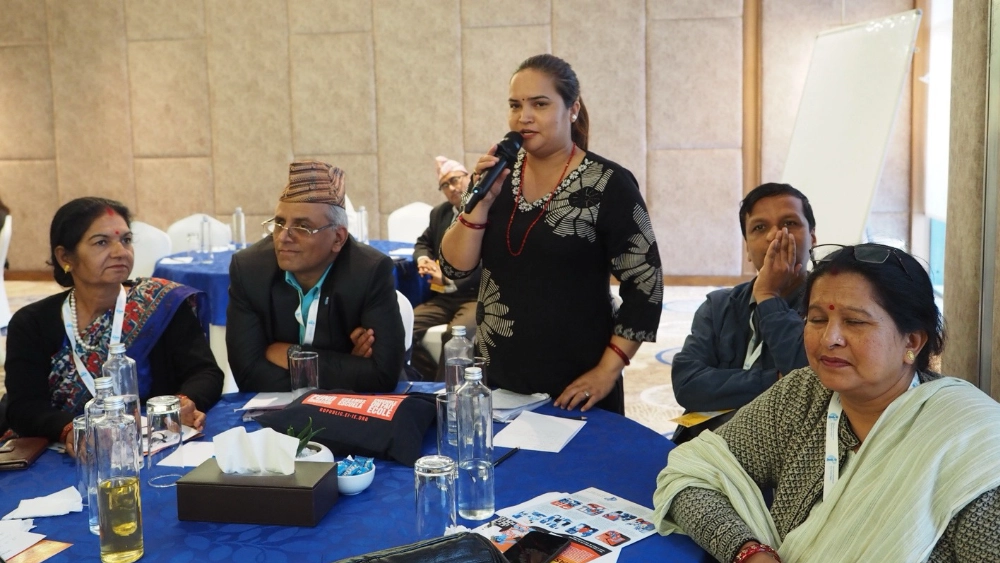
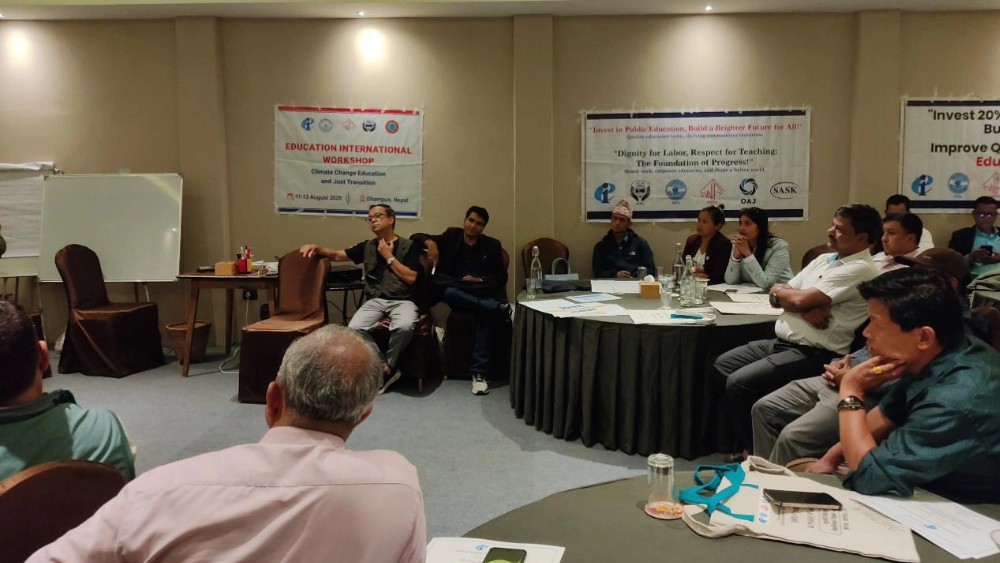
For Kushmita Tiwari, treasurer of the ISTU, Nepal’s increasing vulnerability to climate change is a trade union issue. Responding to growing concerns among educators, ISTU invited educators, unionists, and government representatives to discuss how climate change is affecting their work in Kathmandu, Dhampus, and Mugu. With more than 36 educators in attendance in each session, they discussed the effects of climate change on their schools and communities and demanded bolder climate action from the government.
According to Tiwari, the increasing difficulties that educators face due to climate disasters have emerged as a critical issue. During the rainy season, when floods and landslides are commonplace, teachers must travel in dangerous terrain to reach their schools, which are also not prepared to withstand the effects of climate change. This is a manifestation of the climate crisis in the workplace, Tiwari confirms. “We called the local authorities to join the workshop to share the problems we are facing,” she said. She noted that the event was a venue where educators and community members could raise their concerns regarding many issues related to the climate crisis.
In Nepal, it is common for menstruating women and girls to leave the house during their period. When there is a hurricane or other weather disturbance, this becomes more difficult and dangerous. They cannot even go to schools to seek shelter because these are also damaged. This was one of the scenarios that the women educators raised during our social dialogue
Kushmita Tiwari, ISTU
Climate change is also deepening social inequalities in Nepal, particularly for women and girls. Women educators highlighted this increasing hardship during the workshops. “In Nepal, it is common for menstruating women and girls to leave the house during their period. When there is a cyclone or other weather disturbance, this becomes more difficult and dangerous. They cannot even go to schools to seek shelter because these are also damaged. This was one of the scenarios that the women educators raised during our social dialogue,” Tiwari said.
In South Asia, teachers are also suffering through record heatwaves. Since 2024, the region has been gripped by deadly heatwaves, with 460 million children exposed to extreme heat according to UNICEF. By 2030, 90% of South Asians could experience extreme temperatures reaching up to 50°C.
According to Thakshila Mendis, former general secretary and current treasurer of the ACUT, rising temperatures in Sri Lanka have been affecting the health and well-being of educators and students. “During the E4SD conference in Nepal, we realized the need to remind teachers of taking precautions on heat stress,” she said.
During the E4SD conference in Nepal, we realized the need to remind teachers of taking precautions on heat stress.
Thakshila Mendis, ACUT
Amidst intensifying heatwaves, the ACUT gathered more than 25 members in an online meeting in July 2025 to relay practical guidelines for mitigating the impacts of heat stress in the classroom, which they learned at the E4SD conference. “One simple guidance was the ‘water bell’ — which teachers would ring during the hottest times of the day as a reminder for a water break,” Mendis said.
Building union power and sparking meaningful change
For Tiwari and Mandis, the E4SD conference provided an important learning space where unionists could strengthen their capacities and understand that climate change is a problem that requires systemic, collective action, such as demanding quality climate education for all. “We were able to learn about climate change and the importance of quality climate education. I believe this is something we should include in the national curriculum,” Tiwari said.
Anand Singh, EIAP Regional Director, asserts that the E4SD program has contributed to strengthening union solidarity and influence across the region. “I am proud of our affiliates for seeing the connections between climate justice and the work that we do as unions. As educators and unionists, we are called upon to plant the seeds of systemic change by teaching for the planet and sparking genuine climate action in the Asia-Pacific,” he said.
The fourth edition of the “Educators Stand for Climate Justice and Just Transition Conference” will be held on 21– 22 April 2026 in Taipei, Taiwan, with North Asia as this year’s thematic focus.