
South Asian educators unite for climate justice, just transition amidst extreme heat
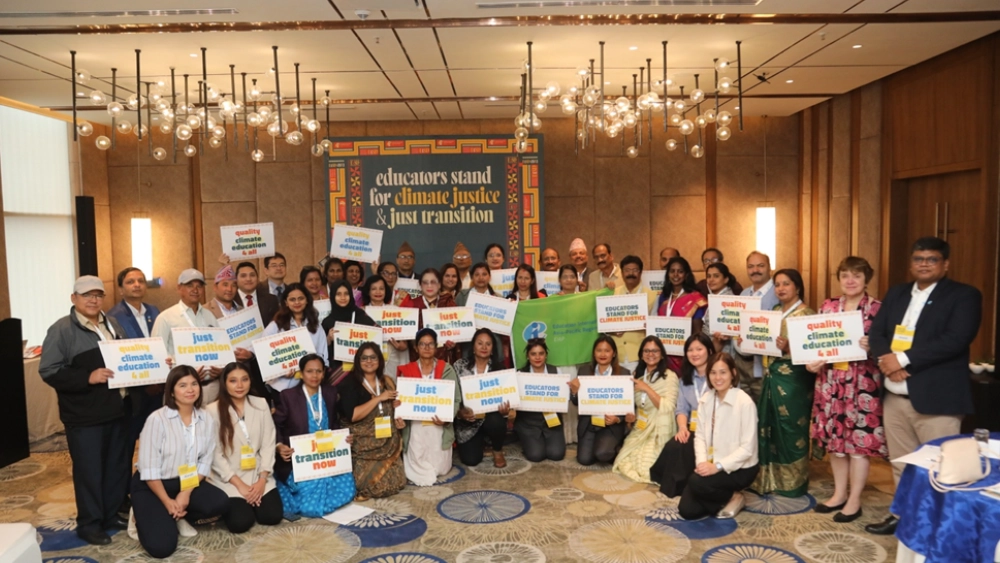
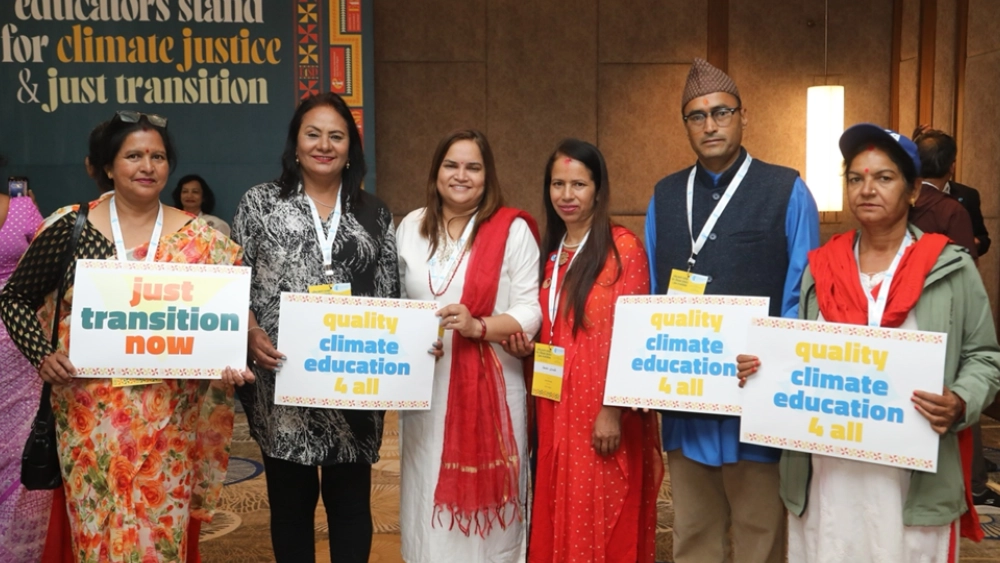
More than 60 South Asian educators gathered at the Educators Stand for Climate Justice and Just Transition conference in Kathmandu, Nepal from April 28 to 30, 2025. The conference facilitated capacity-strengthening and strategizing on national action plans to demand climate justice, a just transition and quality climate education for all.
On its third edition, education leaders identified extreme heat as a key just transition issue in education. In South Asia, where temperatures can surpass 50C, educators and students are already experiencing heatstroke symptoms during heatwaves, according to education leaders from India, Bangladesh, Sri Lanka and Nepal. Schools have also been forced to close due to extreme heat, disrupting learning among students.
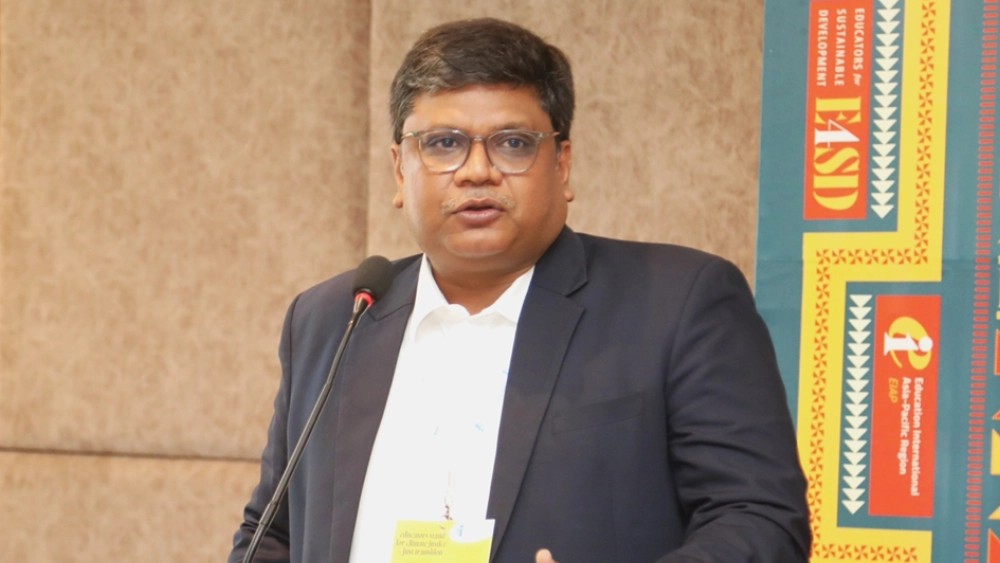
“The education sector is in fact one of the most affected during periods of extreme heat. Many schools, particularly those in impoverished areas, are ill-equipped to cope with high temperatures. With 28% of South Asian children already facing an average of 4.5 heatwaves yearly, hotter days will only widen inequities they already endure.”
Anand Singh, EIAP Regional Director
“The education sector is in fact one of the most affected during periods of extreme heat. Many schools, particularly those in impoverished areas, are ill-equipped to cope with high temperatures. With 28% of South Asian children already facing an average of 4.5 heatwaves yearly, hotter days will only widen inequities they already endure,” said Anand Singh, EIAP Regional Director in his remarks.
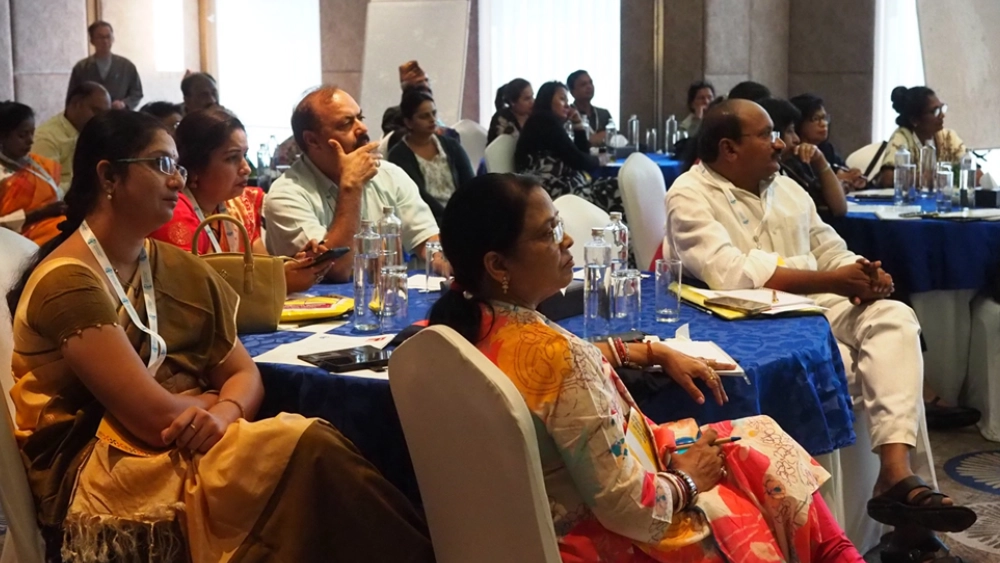
Dr. Suvajee Good, public health expert at the WHO, explained how extreme heat is already affecting the health and well-being of students and educators. Speaking via Zoom, she shared practical tips for managing heat stress in school settings and concrete demands to systemically address its impacts. Meanwhile, Monica Lama, Programme Officer at the UNESCO Delhi office, presented about climate change education in the South Asia sub-region. Despite barriers, CCE in South Asia is gaining recognition through integration through curriculum integration, teacher training and policy frameworks, she said.
Responding to the growing concerns of educators, EIAP launched a practical infographic on heat stress in classrooms, available in Hindi, English, Chinese, and Japanese. The guide provides sustainable and low-cost methods to cope with extreme heat, fostering safer and more conducive learning environments.
Satoshi Tamai, Director for Planning and Coordination at ITUC-AP, presented the state of just transition in South Asia. He reiterated that workers, including educators, need to engage with the policy processes to ensure that fair and inclusive policies are established to cushion the negative impacts of energy and economic transitions. “Workers cannot be passive in the climate crisis. Workers need to be active players in a just transition,” he added.
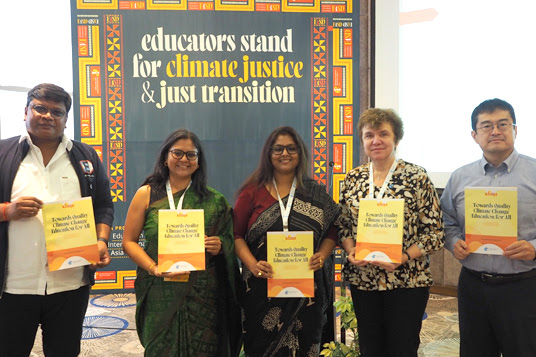
The conference also launched a report titled “Towards Quality Climate Education for All: A Critical Assessment of Climate Change Education Policies in India and the Philippines,” which examines policy and implementation gaps in CCE in the Philippines and India, two of the most climate-vulnerable countries in the region. The study also gathered union responses on advancing quality climate education in their respective contexts. The report will be formally launched in July 2025.
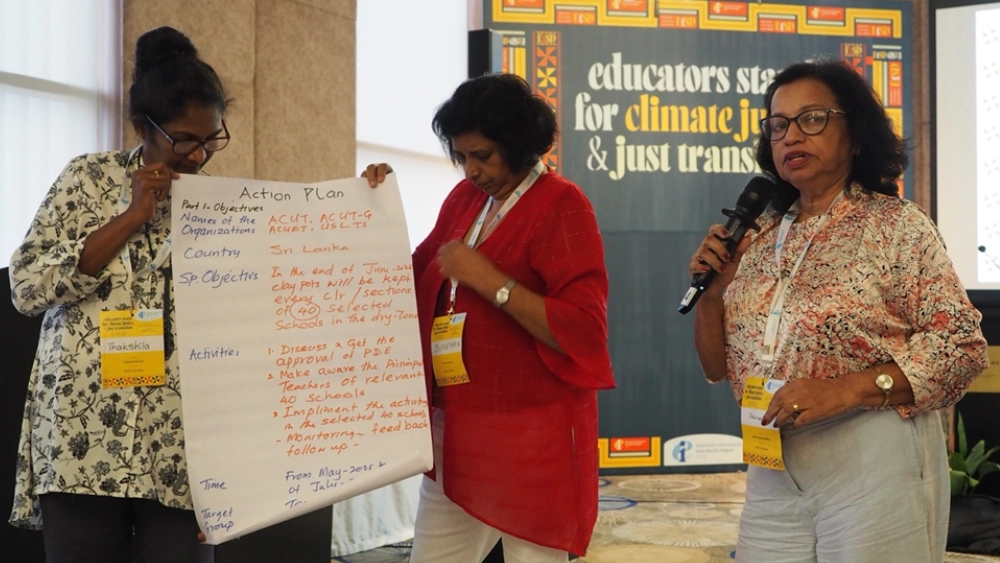
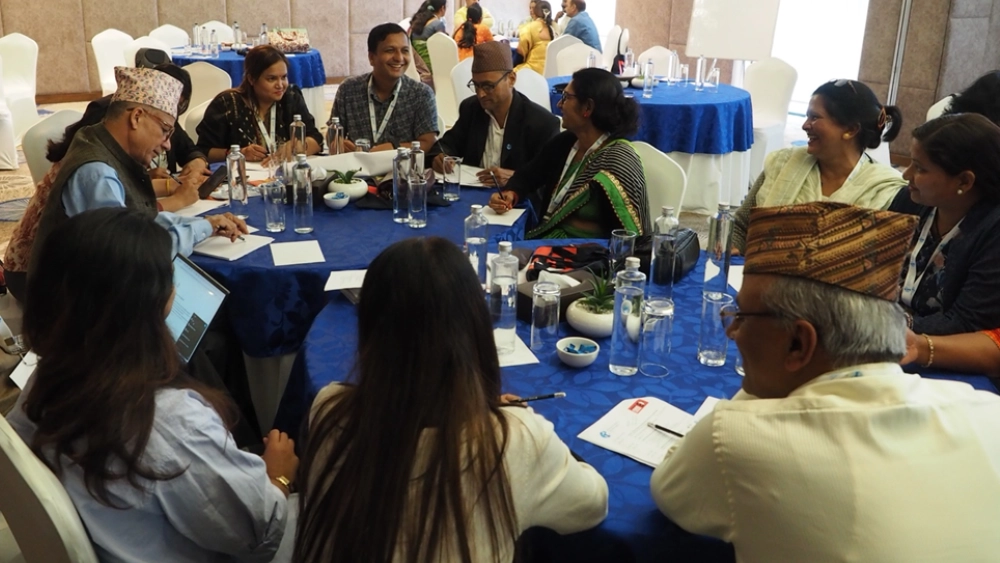
Experts, civil society representatives, and education specialists from organisations such as UNICEF Kathmandu, FES Nepal and the GPE (Global Partnership for Education) also joined the event. Dr. Pramod KC of Kathmandu University and Naren Khatiwada of Youth Advocacy Nepal spoke about the specific impacts of climate change in South Asia. Additionally, Laxman Sharma, a dedicated educator and general secretary of the General Federation of Nepalese Trade Unions, highlighted the need to advocate for workers’ rights amidst the climate crisis.
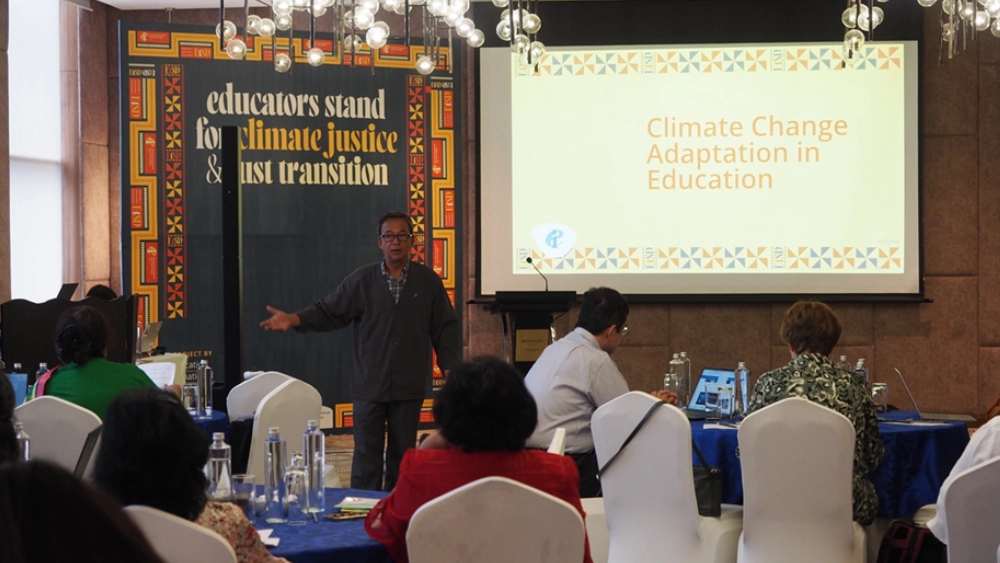
The conference concluded with education leaders reaffirming their commitment to climate justice and a just transition through their national climate action plans.
The conference concluded with education union leaders reaffirming their commitment to climate justice and a just transition through their national climate action plans.
In his closing remarks, EIAP Regional Director Anand Singh stressed the transformative potential of South Asian educators to advance climate justice: “Our actions—whether in classrooms, streets, or policy spaces—can shape a sustainable future.”